
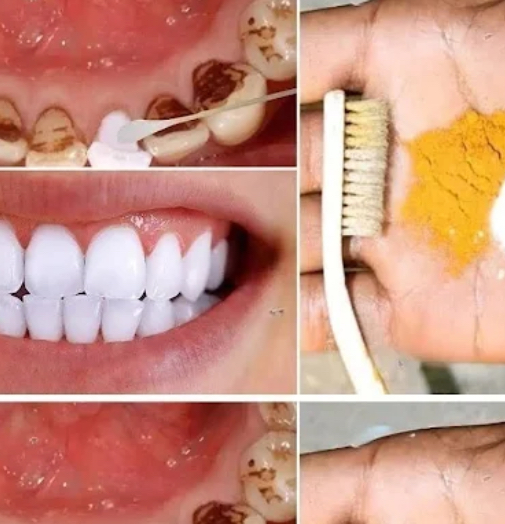
Home Teeth Whitening: Can Turmeric and Baking Soda Really Whiten Teeth in 2 Minutes?
A brighter smile can make you feel more confident, but professional teeth whitening can be expensive. That’s why simple home remedies using everyday kitchen ingredients continue to attract attention online.
One popular DIY method combines turmeric and baking soda and claims to make teeth look whiter in only two minutes. But does this natural teeth-whitening remedy really work?
The answer is more nuanced than viral posts often suggest. Baking soda has been studied for its ability to help remove surface stains, while research on turmeric has not shown a meaningful tooth-whitening effect.
What Is Teeth Whitening?
Teeth whitening generally refers to making teeth appear lighter by removing stains or changing the color of the tooth.
There is an important difference between surface stain removal and true bleaching. Abrasive ingredients such as baking soda may help clean away certain stains on the outside of teeth. Professional and over-the-counter bleaching products use specific active ingredients to lighten tooth color more directly.
Research has found that baking-soda-containing toothpastes can be effective at removing dental stains and improving the appearance of whiteness.
Why Do People Use Turmeric and Baking Soda?
Turmeric
Turmeric is widely used in cooking and traditional practices, and it has been investigated for various biological properties.
However, its popularity as a natural teeth-whitening ingredient is stronger than the scientific evidence supporting it. In a laboratory study examining popular natural whitening products, turmeric did not produce a statistically significant whitening effect.
So while turmeric may be an interesting natural ingredient, it should not be described as a proven teeth-whitening treatment.
Baking Soda
Baking soda, or sodium bicarbonate, is different.
Research has found that baking soda can help remove surface stains from teeth. Baking soda also has relatively low abrasivity compared with some other abrasive materials used in oral-care products.
That doesn’t mean that rubbing plain baking soda on your teeth will produce the same results as a professionally formulated toothpaste. The research is primarily focused on baking-soda-containing dentifrices, not homemade turmeric-and-baking-soda pastes.
DIY Turmeric and Baking Soda Teeth Paste
If you’re considering this viral home remedy, understand that there is limited evidence for its whitening effectiveness.
Ingredients
- 1 teaspoon turmeric powder
- 1 teaspoon baking soda
- A few drops of water
Instructions
- Mix the turmeric and baking soda in a small bowl.
- Add a small amount of water until you have a thick paste.
- If you choose to try it, use a soft toothbrush and avoid aggressive scrubbing.
- Rinse your mouth thoroughly afterward.
- Brush normally with your regular fluoride toothpaste.
Important: This recipe should not replace regular brushing with fluoride toothpaste.
Does It Really Whiten Teeth in 2 Minutes?
This is where the viral claim needs some clarification.
There is not strong clinical evidence showing that turmeric and baking soda can bleach teeth in two minutes.
Baking soda may help remove some surface discoloration, which can make teeth appear cleaner or brighter. But that is not the same thing as chemically bleaching the tooth.
A laboratory study of natural whitening products found that turmeric did not produce a statistically significant whitening effect, while other ingredients showed varying results. The researchers also noted that additional research is needed.
So rather than promising a dramatic two-minute transformation, it’s more accurate to describe this as a popular DIY stain-removal idea with limited evidence.
Is Baking Soda Safe for Teeth?
Baking soda itself has relatively low abrasivity, and research on baking-soda toothpastes has found evidence supporting their ability to remove stains.
However, the way an ingredient is used matters.
Commercial toothpaste is carefully formulated with specific concentrations, ingredients, and safety testing. A homemade paste does not have the same formulation or testing.
Avoid aggressive brushing or repeatedly scrubbing your teeth with homemade abrasive mixtures. Excessive mechanical abrasion can contribute to tooth wear over time.
What About Sensitive Teeth?
Some people experience sensitivity or gum irritation when using whitening products. The American Dental Association notes that tooth sensitivity and gingival irritation are among the adverse effects reported with over-the-counter whitening products.
If your teeth already feel sensitive, you have cavities, gum problems, damaged enamel, exposed tooth roots, or other dental concerns, talk with a dentist before experimenting with whitening remedies.
A Better At-Home Approach to Whiter Teeth
If your goal is a brighter smile, consider options that have been studied specifically for tooth whitening.
1. Use fluoride toothpaste regularly
Good everyday oral hygiene is the foundation of a healthy smile. Fluoride toothpaste helps prevent cavities and is widely recommended for routine oral care.
2. Consider a whitening toothpaste
Some whitening toothpastes use ingredients such as baking soda to help remove surface stains. Evidence supports baking-soda-containing dentifrices for stain removal and improved whiteness.
3. Consider whitening strips
Whitening strips have stronger clinical evidence than many DIY remedies. The American Dental Association has reported that clinical studies support their whitening effectiveness, although sensitivity and gum irritation can occur.
4. Talk with your dentist
A dentist can help determine whether discoloration is caused by surface staining or something deeper. They can also recommend an appropriate whitening option based on your teeth and existing dental work.
Turmeric and Baking Soda Teeth Whitening: Pros and Cons
| Potential benefit | Important limitation |
|---|---|
| Inexpensive ingredients | Limited evidence for the combination |
| Easy to prepare | Not proven to whiten teeth in 2 minutes |
| Baking soda can remove some surface stains | Surface stain removal is not the same as bleaching |
| Uses common household ingredients | Homemade mixtures are not professionally formulated |
| Turmeric is a familiar natural ingredient | Research has not demonstrated significant whitening from turmeric |
Frequently Asked Questions
Can baking soda make teeth look whiter?
Yes, baking soda can help remove certain surface stains. Research on baking-soda toothpastes supports their ability to improve the appearance of stained teeth.
Does turmeric whiten teeth?
Current evidence does not establish turmeric as an effective teeth-whitening ingredient. One laboratory study found no statistically significant whitening effect from turmeric.
Can I whiten my teeth naturally in 2 minutes?
There is no reliable evidence that a homemade turmeric-and-baking-soda paste can significantly whiten teeth in two minutes. A quick brushing may remove some surface debris or staining, but true tooth bleaching takes a different approach.
Can I use baking soda instead of toothpaste?
Homemade baking soda should not be considered a replacement for regular fluoride toothpaste. Fluoride toothpaste provides cavity-prevention benefits that plain baking soda does not provide.
Should I try DIY teeth whitening if I have sensitive teeth?
It’s better to speak with a dentist first, especially if you have persistent sensitivity, cavities, gum problems, enamel damage, or other dental issues.
Final Thoughts
The idea of getting a whiter smile in just two minutes with ingredients from your kitchen is certainly appealing, but the science doesn’t support promising dramatic whitening from turmeric and baking soda.
Baking soda does have evidence behind its ability to help remove surface stains, particularly when used in formulated dental products. Turmeric, however, has not been shown to provide a meaningful whitening effect in the available research.
If you’re looking for a brighter smile at home, regular fluoride toothpaste, professionally formulated whitening products, and guidance from a dental professional are more evidence-based options.
A natural remedy may sound simple, but when it comes to your teeth, gentle and evidence-based care is always worth prioritizing.